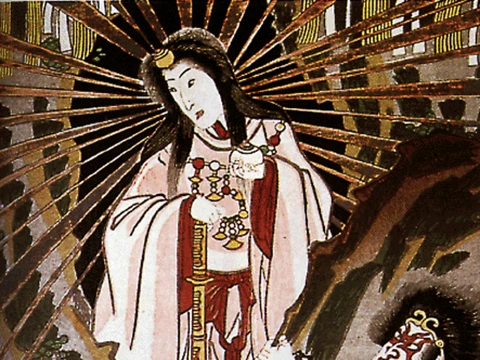
Japanese folklore
Myths of kami, yōkai, and oni—where nature and spirit intertwine.

Wikipedia / Wikimedia Commons
Japanese folklore encompasses the rich tapestry of myths, legends, and oral traditions that have shaped Japan's cultural identity for centuries. Rooted in Shinto, Buddhism, and local animistic beliefs, these stories feature a vast array of supernatural beings—from benevolent kami (spirits) to malevolent yōkai (monsters) and oni (demons). Passed down through generations, they explain natural phenomena, teach moral lessons, and preserve historical memories.
- Origin
- Ancient Japan (pre-8th century CE)
- Primary Sources
- Kojiki, Nihon Shoki, Konjaku Monogatari
- Key Beings
- Kami, yōkai, oni, tengu, kappa, kitsune
- Core Themes
- Nature worship, ancestor reverence, moral caution
- Influences
- Shinto, Buddhism, Taoism, Chinese mythology
- Modern Legacy
- Manga, anime, films, festivals (e.g., Setsubun)
Lore & Background
Japanese folklore is deeply intertwined with the natural world, where mountains, rivers, trees, and even stones are believed to house kami. The earliest recorded myths appear in the 8th-century chronicles Kojiki and Nihon Shoki, which describe the creation of the Japanese islands by the primordial kami Izanagi and Izanami. These stories also introduce Amaterasu, the sun goddess, and Susanoo, the storm god, whose conflicts and adventures set the stage for Japan's imperial lineage and seasonal cycles.
Reader's Guide
Japanese folklore remains significant as a repository of cultural identity and continuity, preserving practices, beliefs, and narratives that have shaped Japanese society. Its folk religion elements, such as the Namahage ritual and household altars, illustrate how ancient customs adapt to modern life. The wealth of folktales, including classic stories like Momotarō and heterotype marriage tales, provides insight into moral values and social norms. The study of folklore (minzokugaku) and the Mingei movement's appreciation of folk craft highlight efforts to document and elevate these traditions. Contemporary interest in yōkai and power spots shows folklore's ongoing relevance, while practices like salt scattering and directional taboos persist in daily life. The compendium of folk art, from Ōtsu-e paintings to koinobori banners, and the collection of household items by Keizo Shibusawa, now housed in the National Museum of Ethnology, underscore the material legacy of Japanese folklore.
Did You Know?
- The Namahage are oni (demons) from Oga Peninsula folklore, who visit homes on New Year's Eve to scare children into good behavior.
- Kitsune (foxes) are believed to be shape-shifters and messengers of Inari, the kami of rice and prosperity.
- The kappa, a water-dwelling yōkai, is known for its love of cucumbers and its polite bow, which allows victims to escape by returning the gesture.
- Tengu are bird-like yōkai or fallen mountain kami, often depicted with long noses and red faces, and are associated with martial arts and mischief.
More in Japanese folklore 1-24
Spotted an error? Know more?
This is a living reference — every entry is fact-audited, and reader corrections feed straight into our audit queue. Suggest an edit · See this site's audit record